
Open water panic triathlon moments are more common than most athletes admit. Panic in the swim does not mean you are unfit or not made for triathlon. It usually means your body has not practised the cues it needs when the pool disappears, the water gets darker, and the race pack gets close.
This guide shows you how to overcome open water panic before your next tri using a Melbourne-specific base-building progression. We will move from controlled work at MSAC and the Tri Alliance training locations, to confidence work around Albert Park, then to Port Phillip Bay sessions at Elwood Beach when conditions and coaching support are right.
Important: this is training guidance, not medical advice. If panic comes with chest pain, faintness, severe breathlessness, blackouts, or symptoms that feel unusual for you, stop the session and speak with a qualified health professional before returning to open water.
Why open water panic happens in triathlon
Open water panic usually starts when your breathing rhythm breaks. In a pool you have lane ropes, a black line, walls every 25 or 50 metres, clear water, and predictable space. In a triathlon swim you may have chop, cold water, low visibility, other athletes touching your feet, and no wall to grab after 25 metres.
Triathlete’s current open-water anxiety guidance aligns with what good coaches see every season: visibility should be part of your safety plan, confidence should start in small controlled environments, and panic needs a rehearsed pause-and-reset response. You do not want your first reset drill to happen 150 metres into a race.
The common Melbourne triggers
For Melbourne athletes, the panic triggers are predictable. Winter pool training can make you technically stronger, but Port Phillip Bay adds temperature change, salt water, wind, chop, glare, wetsuit tightness, and less visibility. A 750 metre sprint-distance swim can feel very different from 15 x 50 metres at MSAC, even when the total distance is similar.
The Melbourne base-building advantage
Winter is a strong time to work on open water confidence because you are not trying to sharpen every system at once. You can use indoor swim technique, controlled breathing, easy aerobic work, and short confidence exposures before the spring race season builds.
Tri Alliance athletes have useful Melbourne touchpoints for this progression: coached pool sessions at MSAC, run and bike work around Albert Park Lake, and open-water sessions at Elwood Beach when the program and conditions allow. MSAC casual adult lap swim entry is listed by State Sport Centres at $8.50, which makes extra controlled practice accessible without waiting for race week.
| Stage | Venue focus | Session target | Pass marker before moving on |
|---|---|---|---|
| 1. Pool control | MSAC or coached pool | 45 minutes, including 8 x 50m relaxed breathing and 6 x 100m steady aerobic swimming | You can exhale underwater for the full rep without breath-holding |
| 2. Pool disruption | MSAC squad lane | 12 x 25m sighting every 6 strokes, then 4 x 100m with a 10 second easy float between reps | You can reset without grabbing the wall first |
| 3. Dryland confidence | Albert Park Lake precinct | 20 minute easy run or walk, 5 minutes sighting practice, 5 minutes visualising the swim start | You know your start cue, reset cue, and first 100m effort level |
| 4. Controlled bay exposure | Elwood Beach / Port Phillip Bay | 6 x 2 minutes parallel to shore, 60 seconds standing or floating reset between efforts | You can pause, breathe, and restart without ending the session |
| 5. Race rehearsal | Elwood or event venue | 2 x 8 minutes continuous easy swim, including 3 deliberate sighting checks per minute | Your first response is your reset plan, not panic sprinting |
A simple reset plan for panic in the water
Your race-day reset plan should be short enough to remember when your heart rate is high. The best plan is not complicated. It gives you permission to pause, get air, and restart at a lower intensity.
Use the 10-6-3 reset
10 seconds: stop swimming, roll onto your back or tread water, and make the first job breathing out slowly. If you are near shore in training, stand up if it is safe to do so.
6 easy strokes: restart with six very easy strokes. Think long neck, soft hands, bubbles out, and no sprinting. If freestyle feels too much, use breaststroke or backstroke until rhythm returns.
3 sighting checks: once you are moving again, sight three times over the next 20 to 30 strokes. You are confirming direction and proving to your brain that you are back in control.
Three winter sessions to build open water confidence
Session 1: MSAC breathing control, 45 minutes
- Warm-up: 300m easy swim, mixing freestyle and backstroke.
- Drill set: 8 x 50m with 15 seconds rest. Keep the exhale smooth before changing breathing pattern.
- Main set: 6 x 100m aerobic, 20 seconds rest. Rate calmness after each rep from 1 to 5.
- Reset practice: 6 x 25m. Swim 12.5m, stop, float or tread for 10 seconds, then restart easy.
- Cool-down: 200m relaxed choice stroke.
Session 2: Albert Park confidence loop, 30 to 40 minutes
Albert Park Lake is a useful training precinct, but do not treat it as an open-water swim venue unless a session is specifically approved and supervised. Use the area for low-pressure routine building: 10 minutes easy walk or jog, 5 minutes shoulder mobility, 5 minutes sighting practice toward fixed landmarks, then 10 minutes visualising the first 50m, first reset, and first turn buoy.
Session 3: Elwood Beach controlled exposure, 35 to 50 minutes
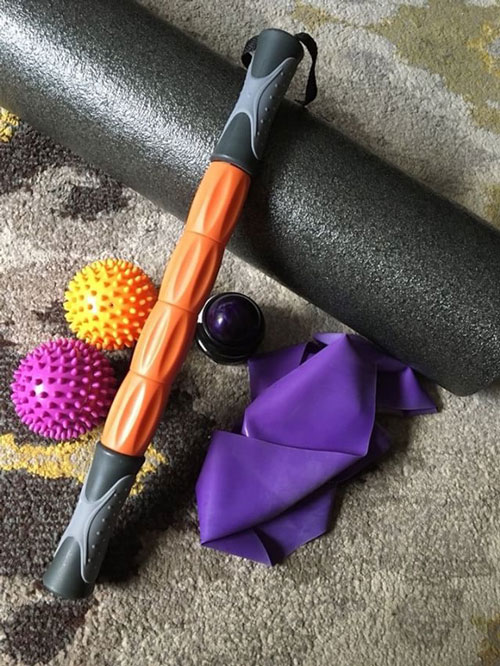
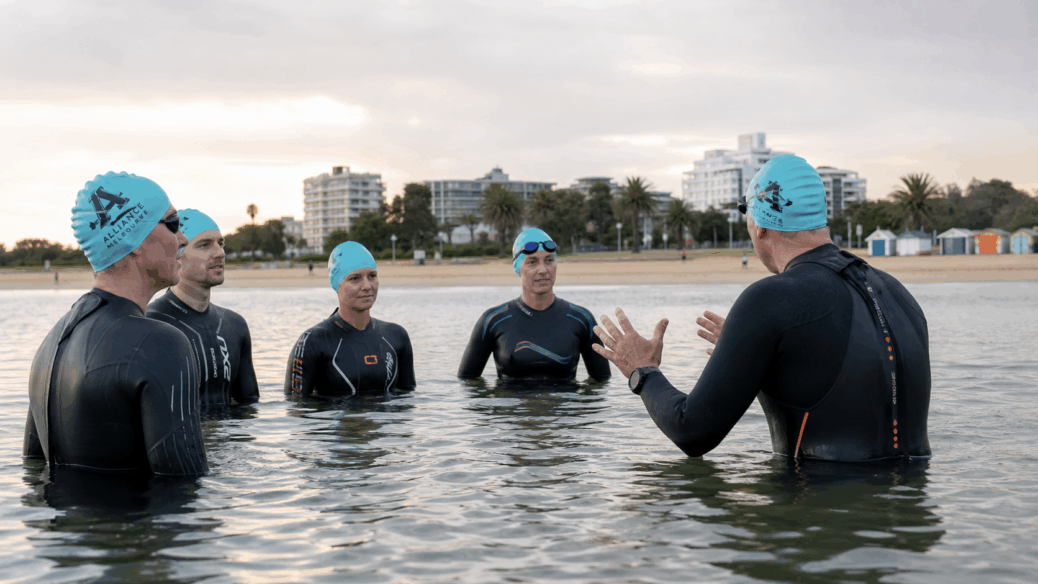
Tri Alliance’s Elwood open-water sessions meet around the Elwood Life Saving Club area and include practical kit such as wetsuit, fins, paddles, and bands when prescribed. For panic-prone swimmers, stay close to shore, stay with the group, and keep the first exposure short.
- Dryland: 6 to 10 minutes band warm-up and breathing rhythm.
- Water entry: 3 minutes standing or wading, face in water, bubbles out.
- Main set: 6 x 2 minutes swimming parallel to shore, 60 seconds reset between efforts.
- Skill insert: sight every 6 to 8 strokes for 4 minutes total.
- Exit practice: walk out calmly, steady breathing, then note what triggered anxiety.
If conditions are rough, cold, polluted, or outside your ability, skip the bay and do the pool session. Confidence is built by repeatable success, not by forcing a bad exposure.
What to do in the final 7 days before race day
Do not cram open-water bravery in race week. In the final 7 days, keep the work familiar. One short open-water confidence swim of 10 to 20 minutes is enough for many athletes if the conditions are safe and the session is coached or supported.
For a sprint-distance race with a 750m swim, your final rehearsal might be 2 x 6 minutes easy with a reset between efforts. For a beginner tri with a 300m to 400m swim, 6 x 90 seconds easy can be enough. For an Olympic-distance 1.5km swim, use 3 x 6 minutes relaxed and focus on sighting rhythm, not pace.
Winter nutrition also matters in a practical way: arrive warm, avoid rushing from car to water, and use the same pre-session food and fluid routine you already tolerate in training. Race morning is not the time to test a new breakfast, gel, or caffeine habit.
Not for you if…
This article is not a substitute for medical care, mental health support, surf lifesaving advice, or water safety instruction. It is also not for athletes who want to tough it out alone in cold or rough water. If your panic is severe, if you have a medical history that affects swimming safety, or if you cannot yet swim 400m continuously in the pool, start with coached pool work before moving into open water.
How Tri Alliance helps Melbourne athletes with open water panic
The fastest way to reduce open water panic is to stop treating it as a personal flaw and start treating it as a coached skill. Tri Alliance’s Melbourne program gives athletes structured swim technique, winter base-building, open-water confidence work, and a squad environment where you can practise without pretending you are already calm.
If you are new to triathlon, start with the Beginner / TRY-the-TRI program. If you are already training but need structure, explore Tri Alliance VIC training or personalised triathlon training. You can also check the open water swimming timetable when the program is running.
Call to action: If open water panic is the thing holding you back from your next tri, book a coached session rather than waiting for race week. Build the reset now, then race with a plan.
FAQ: open water panic triathlon training
Is open water panic normal in triathlon?
Yes. Many competent pool swimmers feel anxious in open water because the environment changes. Cold water, pack contact, low visibility, and no wall to grab can all disrupt breathing. The fix is progressive exposure and a practised reset plan.
Can I overcome open water panic without swimming in the bay every week?
You can make a lot of progress in the pool first. Practise exhaling underwater, sighting, floating, restarting, and swimming easy after interruption. Bay sessions then become confirmation work rather than the first place you learn the skill.
Where should Melbourne triathletes practise open water confidence?
Use MSAC or your coached pool sessions for control work, Albert Park for routine and dryland confidence, and Port Phillip Bay locations such as Elwood Beach for supported open-water exposure when conditions are safe.
How far should I swim before my first sprint triathlon?
For a sprint-distance 750m swim, aim to be comfortable swimming at least 1,000m total in a pool session and 10 to 20 minutes continuously in controlled open water before race day. Your coach may adjust this based on your background and event.
What should I do if I panic during the race swim?
Pause, roll onto your back or tread water, breathe out slowly, and restart with six easy strokes. Use breaststroke or backstroke if needed. Signal for help immediately if you feel unsafe or cannot regain control.
Sources checked
- Triathlete.com open-water panic guidance, including visibility, starting small, and pause/reset strategies.
- Tri Alliance VIC location, beginner program, training, personalised coaching, and open-water timetable pages.
- State Sport Centres MSAC pricing page for current casual lap swim pricing.
- Parks Victoria Albert Park visitor information for the 4.7km lake path context.